What Part Does Water Quality Play in Pretreatment?
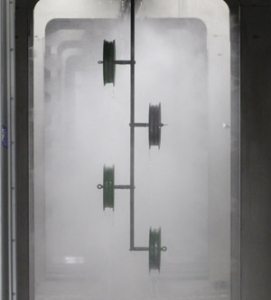
Water may be the most important component in the pretreatment process. 95% or more of the pretreatment process chemistry is water. It is important to give some thought to water’s contribution in your pretreatment operation.

The primary role of water is to remove chemical/soil residue and contaminants from the work area, providing a contaminant free surface for optimum coating adhesion and performance. Therefore, water quality is critical to achieve your customers specified coating performance standards.

Directly related to your water quality are the impurities or contaminants that your water contains. One major problem area in the pretreatment process is high TDS (total dissolved solids) accumulating in the rinse water, and being deposited on metal parts during rinsing. When the water evaporates, these impurities are left behind. PH balance also needs to be maintained. Generally, the closer the PH is to neutral (7) and the lower the TDS, is when you achieve the best water quality.

Poor water quality results in:
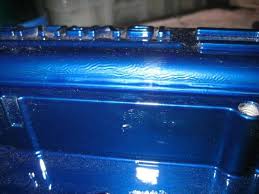
  • adhesion failure
  • rust
  • warranty claims
  • excessive water treatment costs
  • environmental compliance issues

Good water quality is an extremely important key to your pretreatment process, and should be monitored and controlled routinely, efficiently and effectively.




Congratulations to IntelliFinishing’s Joshua Gilmore for being chosen the Central States Chapter Supplier of the Year!

Joshua was recognized on Tuesday, June 20th at the annual meeting for his support and commitment to his chapter and CCAI. Read more here.
The Chemical Coaters Association International is a technical and professional organization that provides information and training on surface coating technologies. Mulitiple active local chapters across the U.S. serve as excellent forums to discuss regional concerns, as well as connect finishers and suppliers through multiple networking opportunities.


Have you researched the latest advances in pre-treatment, racking strategies and powder formulations? These advances do more than just increase the quality of the parts you deliver to your customers.

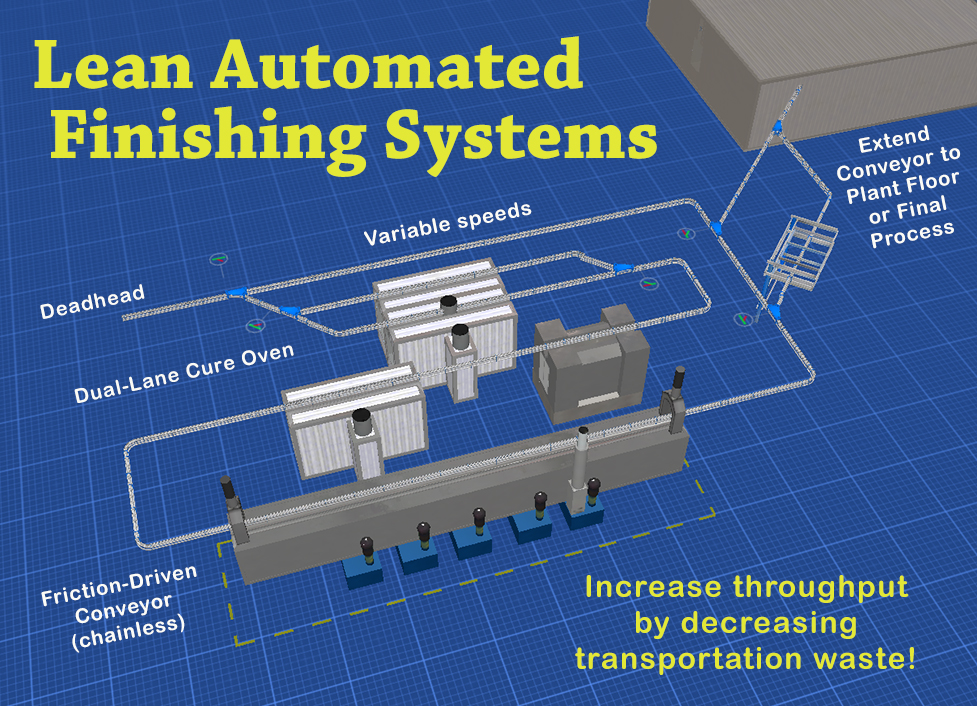
IntelliFinishing complete paint systems for manufacturers offers Lean automated finishing systems that increase your throughput by minimizing line gaps therefore decreasing waiting and transportation waste.

Our distinctive friction-driven (or as we call it, chainless) powder coating or liquid paint conveyor sytem is designed specifically for your manufacturing facility (with your provided specifications) to improve flow with dual lane ovens that optomize cure times with recipes to provide your customers with parts that are cured accurately and consistently every time.

Because it’s not a monument system, our automated paint systems allow for adjustment or expansion to your paint line as new products and processes are introduced!

Did you know that we have tours available? Centrally located in the United States, you can tour a powder coating system that includes a shot-blast spur, or a liquid coating facility to get a visual of what advanced technology can bring to your manufacturing facility. Or you can simply contact us to discuss your automated paint system needs.


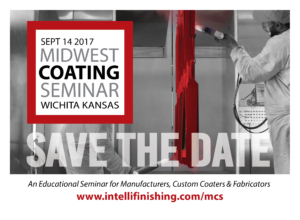
Wow! Is the summer moving quickly? Here it is the middle of June and we are finalizing details of our annual educational event. If you haven’t signed up yet, don’t worry, there’s still time.

We have some great guest speakers lined up to educate us all this year at the Midwest Coating Seminar from Akzo Nobel, JR Custom Metal Products and WSU/WATC/NIAR.

We are planning an all day event (with lunch provided on campus) including tours in the morning (for those interested in learning about an automated powder coating system; contact us for details).

The seminar will begin at 10:30 am on September 14th at WATC (Wichita Area Technical College) Main Campus located at 4004 N. Webb Road, Wichita, KS in the Lecture Hall of 300 Building/S Wing.

As always, this is a free educational event for custom metal coaters, metal manufacturers, or anyone interested in learning about current coating technology, processing equipment or chemical pre-treatment options, with lots of easy conversation in a relaxed environment!

There are multiple inexpensive hotel options close to the technical college (on the northeast side of Wichita, Kansas) for our out-of-town attendees. We hope you’ll sign up to attend and join us for some interesting discussions, free food and drinks.

An expert panel will be available at the end of the seminar to answer all of your paint production questions!

Sign up to reserve your seat today at Intellifinishing – a Complete Paint Systems provider and promoter of educational experiences through networking events. 

Our friends at JR Custom Metal Products, Inc. of Wichita, KS are featured in Powder Coated Tough magazine this month with our “flexible” alternative to power and free finishing system.

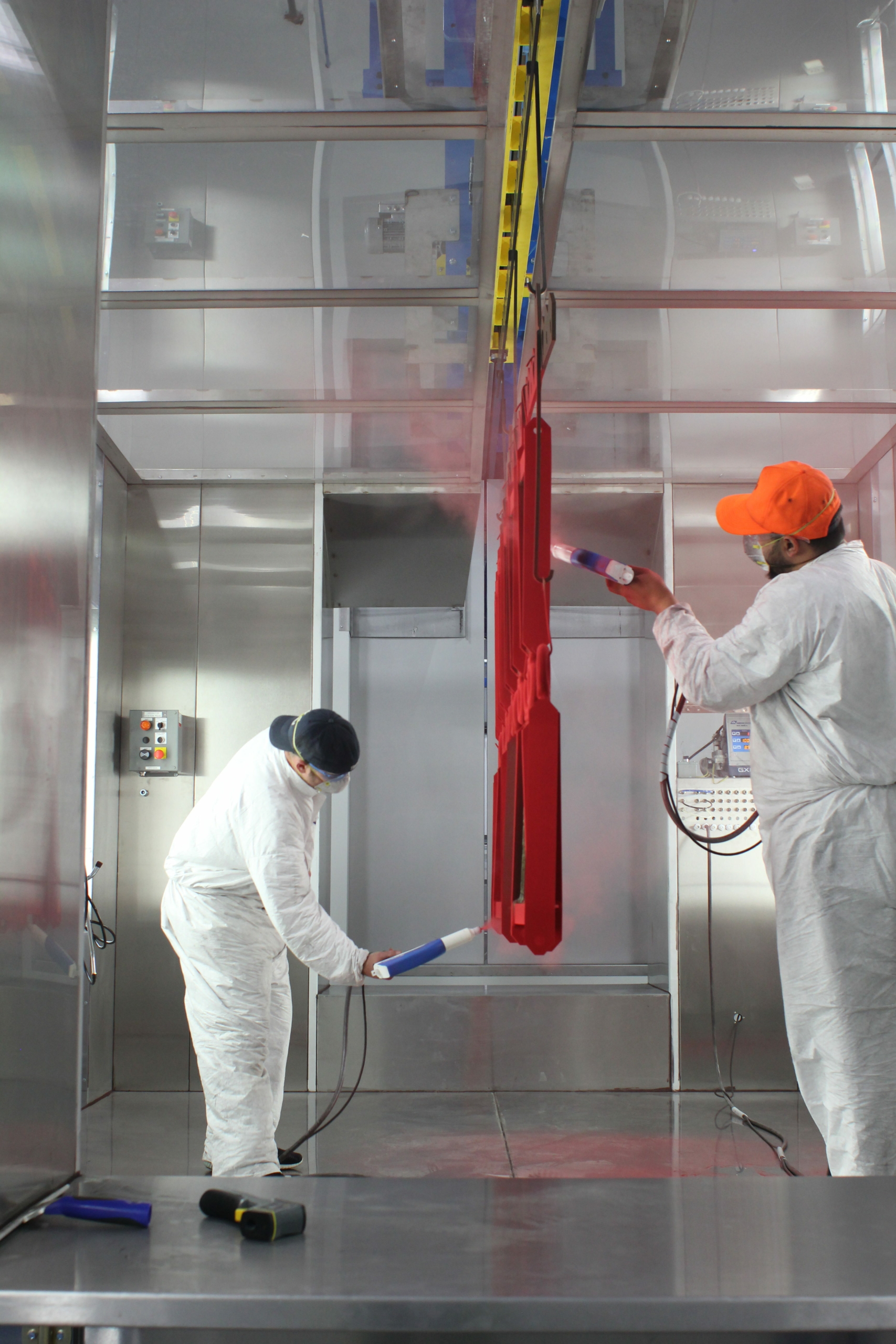
Through extensive research that spanned over five years, the Martinez family learned everything they could about powder coating finishing lines before sealing the deal on an IntelliFinishing Complete Paint System with an in-line shot blast utilizing IntelliFinishing’s smart technology.

Traditional paint systems are limited by line speed. IntelliFinishing load bars are based on part specific recipes with variable line speeds possible at any point in the system. Learn more about IntelliFinishing’s unique line speed here.

Read the Powder Coated Tough article here.


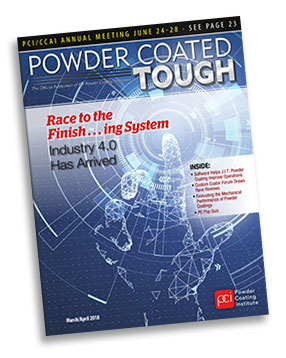
Powder Coated Tough Magazine Cover March/April 2018You’ve all heard it. Industry 4.0 has arrived. The buzz is getting louder about the “industrial internet of things” and how automation can enhance production with advanced technology. Our own John Claman has written an article for the Finishing Industry that is featured in the March/April issue of Powder Coated Tough magazine.

Check it out to learn more about how embedding computer technology and computer system control in equipment can benefit you. A smart finishing system is within your reach!


As a manufacturing professional, you are responsible for optimizing your equipment. The better your equipment works, the better your quality and the higher your throughput. Your equipment should also fit your needs and be customizable based on your processes, which may change over time. An important process of many manufacturing lines is finishing, including liquid and powder coating. When considering finishing systems, there isn’t a one-size-fits-all option.
The finishing process in manufacturing is evolving, leaning more on technology to promote intelligent workflows. A key attribute you may consequently need in your finishing system, therefore, is flexibility. Flexibility in finishing systems translates to process, conveyor, and painting controls that allow you to configure the finish and your system for each part — individually. Read more

One vital element of component and product manufacturing is the finishing process. Traditionally, finishing methods involved segregating the various phases of an assembly line based upon the parts’ specifications, and using the most common finishing process for each respective section. While initially seen as efficient, this process is not sustainable. When design needs change, this system is exceedingly unagile, making it unadaptable in an ever-increasing culture of lean and just-in-time (JIT) manufacturing strategies. This lean approach has triggered a significant paradigm shift in industrial finishing, resulting in a move towards techniques that provide the optimal finish for each individual part—not just a primary collective denominator. This innovative turn in production methodology presents tremendous opportunity for manufacturers of finished products. 

Why the Current System Is Broken

Looking at existing systems, curing factors pose a significant production obstacle. To achieve the best outcome, curing times must be relatively exact; yet cure times are dependent upon the thickness and composition of the respective substrate as well as the specifications of the paint or powder used. Examples: a 12-gauge steel product will require a different cure time than that of a thicker grade steel product. Dissimilar metals, such as steel and aluminum, each necessitates its own unique process because aluminum cools and heats quicker than steel. Each liquid and powder finish has its own cure requirements, often with significant differences but even within the same formula – differences can occur simply due to color. Read more

Outdated Finishing Systems

For the automatic finishing process in manufacturing, it’s no longer necessary to separate parts so that each must have its own conveyorized system. Recent and rapid technological advancements make it possible to finish parts of wildly differing sizes and processes simultaneously with each part process progression uniquely tailored to that part’s optimal process needs—all on one conveyor system. Read more

If you’re a decision maker working in equipment or parts manufacturing, you’ve probably debated whether it’s better to finish your parts in-house or outsource the work to a custom coater. This decision requires a bit of calculus, taking into consideration the costs, workflow, time and capabilities. Even if you’ve run the math countless times, you still may be unsure whether you’re making the right play. To create more confidence in your decision, here are seven questions you can ask yourself when choosing between outsourcing or insourcing your finishing process. Read more