Now May Be the Perfect Time to Invest in a New Finishing System
Choosing to upgrade your finishing system is always a massive undertaking – and the current period of uncertainty may make it seem even more overwhelming.
However, the current climate may be the perfect time to take the leap.
Why? Let’s dive in.
Why the Push Toward a New Normal Offers Exciting Opportunity
There are several central reasons why, even as the COVID-19 pandemic continues, investing in a new finishing system may be a strategic and valuable move.
An Upcoming Spike in Demand – And Pricing
First, many companies have put off key projects in the wake of the COVID-19 pandemic, opting to save money and focus on core aspects of their operation until a more settled “new normal” arrives.
 However, this dip in demand has us here at IntelliFinishing, along with our system partners, raring to go.
We’re hungry to keep our staffs busy, and pricing could reflect that.
But this window won’t last for long. As the reopening picks up momentum, backlogs will start to grow once again, and pricing will level out to normal levels. As confidence in this march toward business as usual grows, those who chose to sit it out and go without key upgrades for the time being will be left facing higher prices and longer project installation turnaround times.
Get Prepared to Be Lean, Agile and Productive in the New Normal
In addition to this likely spike in demand coming down the pipe, investing in a new system now can better prepare your company to emerge into the new normal lean, agile and productive.
By closely examining and evaluating your facilities and ways to eliminate waste, you can emerge stronger than your competitors and ready to meet heightened demand.
Waste on finishing can include the outsourcing of finishing – an expensive cost that most “experts” say could be reduced by at least 30% if brought in-house. Further, with an IntelliFinishing System – due to our lower costs to operate – these savings could be over 60%.
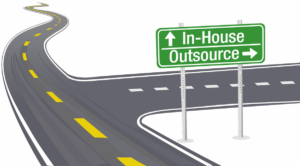 Of course, each situation is unique and would require in-depth analysis, but why not check into bringing your outsourcing in-house? (More on this topic in the coming weeks!) You’d also likely see far less rejects and defects, a reduction in transportation costs, faster turn times, less WIP, and better finish quality.
Even if you currently have a finishing system or multiple systems, they are likely to be much more expensive to operate or fall short of optimal needs than a new system.
If you wander by your finishing system and see high levels of work in progress (inventory) stacked around the system due to the requirement to batch like items together because of the inflexible systems you own, you are wasting money and labor.
If your ovens and your chain flood your building with heat because of large part window openings and chain/carrier heat sink transfer, you are obviously wasting natural gas, as well as possibly electricity to fan or cool your facility.
If your current system can’t keep up with production or has a part window that limits your product sales, it’s time to consider something better.
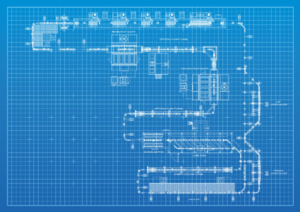 And, finally, if you have or are considering a system that consumes a larger facility footprint than an IntelliFinishing System can provide, you are missing an opportunity to use that space for other revenue producing activities or to have a smaller facility that costs less to build, own or lease.
Why consider a chain-based automated finishing system that is inherently dirty, contributes to finish contamination, is difficult to adapt per part or to innovation, and is wasteful of energy?
Visit an IntelliFinishing System Yourself
Finally, with many employees and leaders working remotely, it could be a prime opportunity to visit a cutting-edge, IntelliFinishing flexible automated finishing system, powder coating system or liquid coating system in your area to get an idea of exactly how investing in one could benefit your operation.
Let IntelliFinishing Be Your Guide
At IntelliFinishing, we’re committed to helping you find the best solution for your unique needs and operation – even if that means not upgrading your system at this time or recommending something more traditional if that’s the best fit.
However, if upgrading to an IntelliFinishing Automated System can bring you real value and efficiency, this could be the perfect time to get to work.
To learn more, contact IntelliFinishing today.
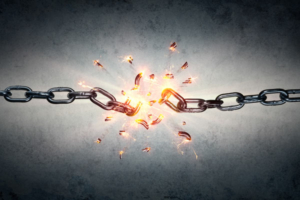 Traditional, chain-driven automated powder finishing systems are usually welded together and set to function at a certain line speed. Because of this, it’s difficult to expand the throughput and increase production. You could try to increase the line speed, but then you’d be increasing the speed of all the system processes. In most cases, that means disaster.
 An IntelliFinishing automated finishing system is the perfect solution for having a modular, modifiable finishing system that can double its throughput.
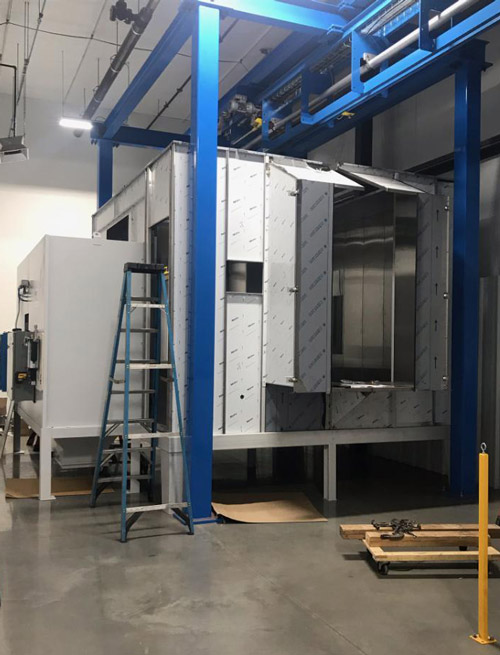 To address these needs, JR Custom chose to fit a new Parker Ionics Prime Coat booth into the company’s existing finishing system.
 Weather
 Equipment Purchases from Vendors Not on the Main System Contract
 Local Licenses and Utilities
  Building Site Construction Delays
 Really Unexpected Situations
 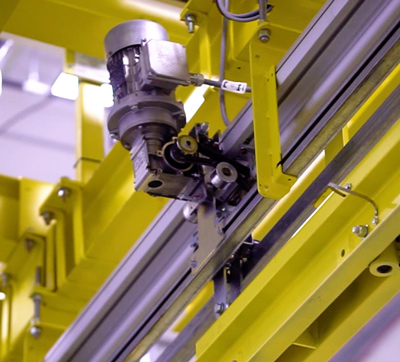 With an IntelliFinishing system, part sway is greatly reduced via the use of variable frequency drive, or VFD, control.
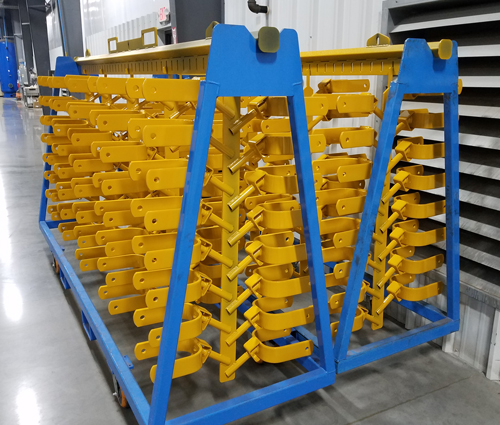 For most systems, it takes the same amount of wash spray and time in the oven or booth to process a dense set of parts hung on a carrier compared to a lightly loaded carrier. This means that, when you can get greater part density, you can boost production without decreasing efficiency, which translates to heightened productivity. For a recent client, we were able to calculate a 20% increase in throughput per hour, simply by assuming the capacity to increase the density of parts on an IntelliFinishing System compared to traditional finishing system carrier loads.
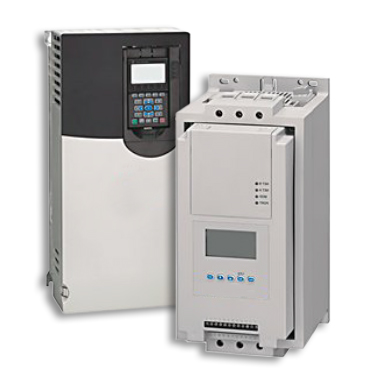 Finally, there are VFDs. Mountable in a motor control center or standalone, VFDs allow for the adjustment of motor speed over time, providing finer control while still realizing the benefits of less wear and tear on the motor.
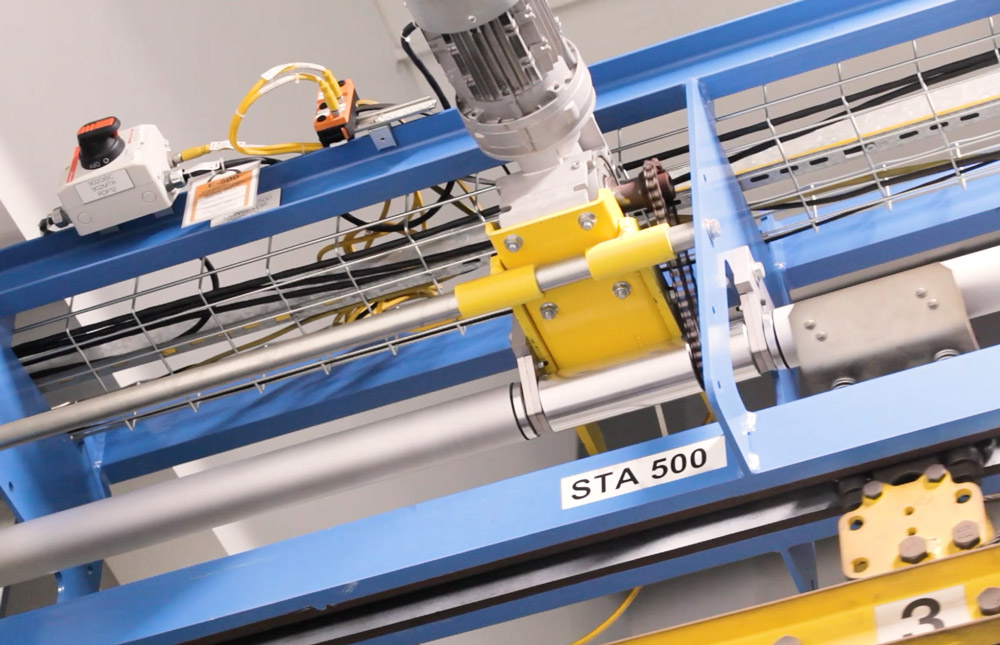 Ultimately, using a VFD on each motor controlling a section of friction tube conveyor on an IntelliFinishing system allows users to increase part density per carrier. This means more throughput in less time. This could amount to as much as 20% more throughput! Combined with the fact that most IntelliFinishing systems are monoplane in design, there are simply far fewer chances parts will bump each other as they wander through pressure washes, shot blasts, ovens, and booths for the typical finishing system set of processes.
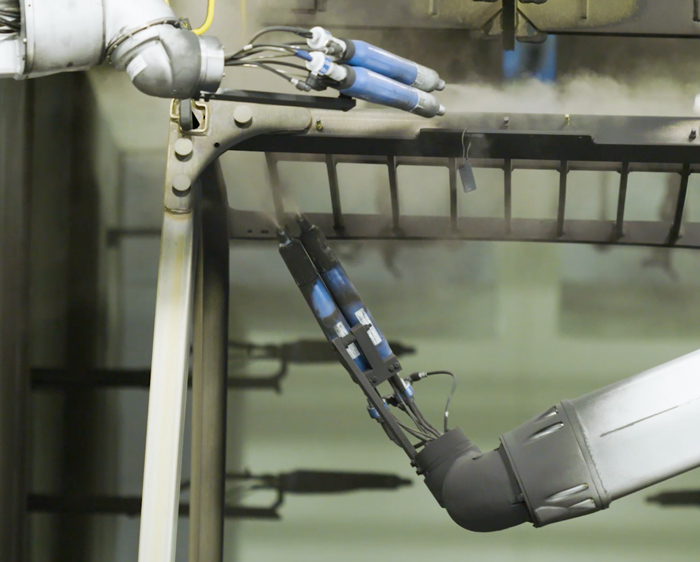 “Automating the coating process provides many benefits such as reduced labor, consistent quality, improved throughput, control over powder usage, and less waste.” Although, using robots sometimes presents challenges and for Hyster-Yale their biggest hurdle is part programming. “At this plant, we produce a wide array of products so many of the components we are powder-coating have many variants. Programming each specific robot path takes time and requires individuals with a very special skill set,” explains Wasson.
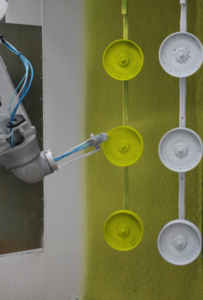 Another customer, Bret Albers, Owner of Albers Finishing & Solutions, recalled their experience with using robots for their liquid painting system. He explains the biggest benefits of using robots are the consistent quality and quicker throughput, “The end result is minimal time in the booth without sacrificing finish quality.” Additionally, he explains that the IntelliFinishing system integrates extremely well with the robotics, which makes it easier to operate, control, and visually see what’s going on with the flight bars.
 However, all customized automated finishing systems are expensive, likely costing your organization anywhere from $1 million to many millions in capital investment. While this investment will result in significant ROI and a lower lifetime cost of ownership, it’s still important to go see systems at work, especially if you don’t currently have an automated finishing system, before you even fully define your specifications.
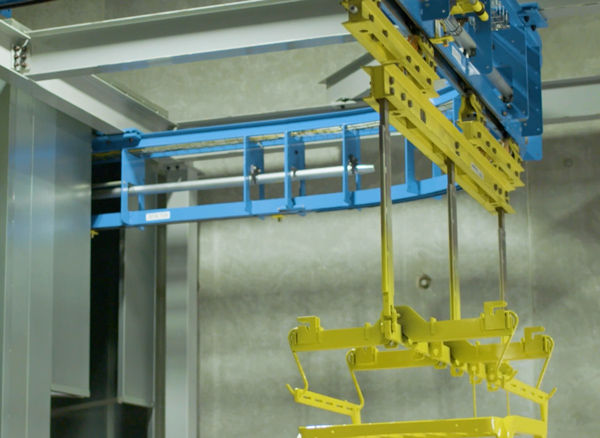 This allows you to cater to parts that require longer cure or paint times than others. Have extra-long parts that need to be finished in a relatively small space? A shuttle system can help to avoid large radius turns. Do you feel like your processes could change over time? IntelliFinishing systems can expand or be modified, and they’re never stuck at one speed or inextricably linked to every other process.
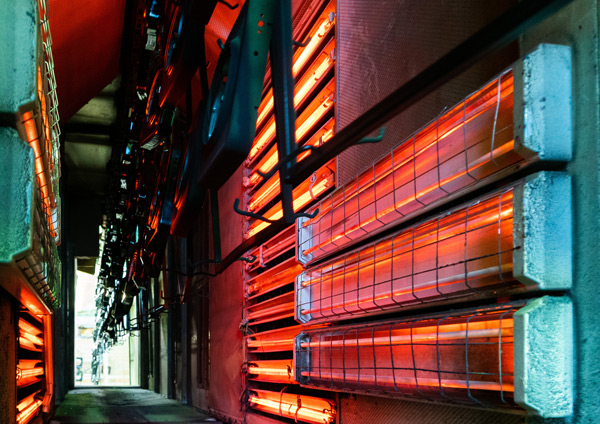 Imagine sheet metal designed to cover appliances, for example. If the IR rays beamed at the parts can reach all (or nearly all) of the surface, the IR oven can heat the product up sufficiently to cure the part in both liquid and powder applications.
 So, with all that said, why hasn’t IntelliFinishing done many systems that use IR cure ovens? It’s certainly not because we view IR ovens as inferior – it’s because our finishing systems are best utilized by companies that have a wide variety of parts and, therefore, require different recipes per part.
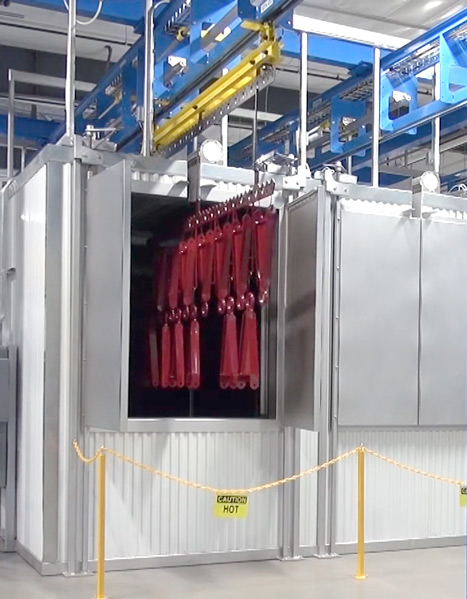 Finally, IR curing isn’t predictable in the way a convection oven can be. In order to determine exactly how long a part must cure in an IR oven, the specific parts must be tested in actual IR ovens or confirmed as viable by another organization that cures very similar parts.